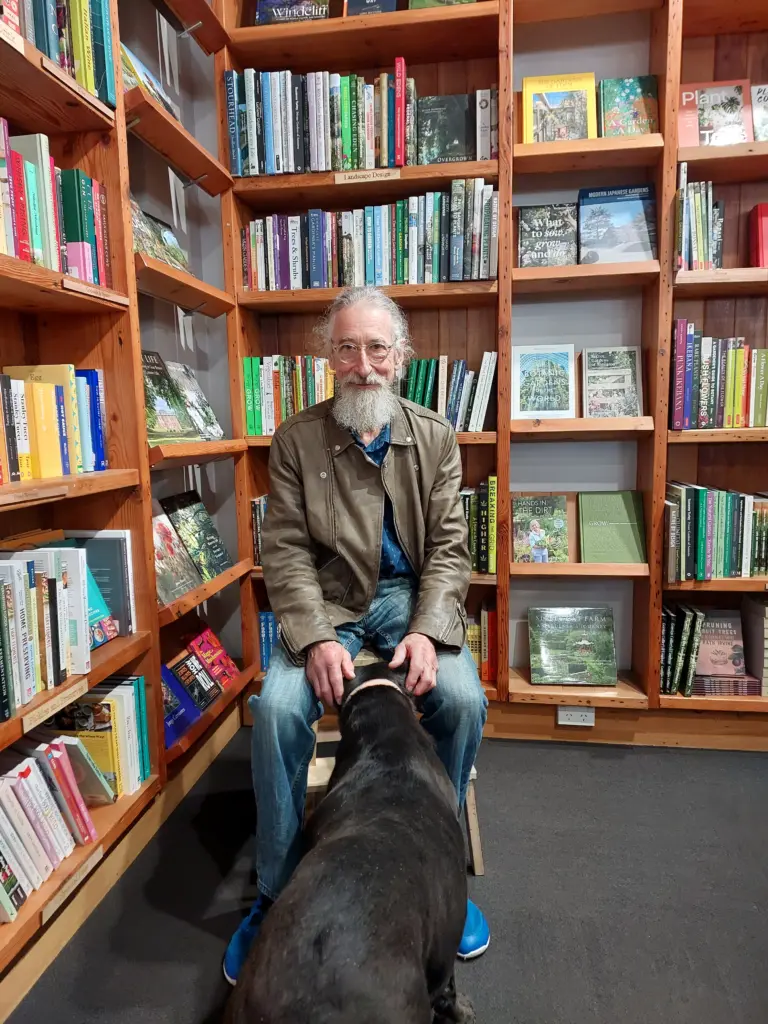

One of New Zealand’s most beloved independent bookshops is celebrating a major milestone, with Christchurch institution Scorpio Books marking 50 years of business this year.
Scorpio Books has grown to become an Ōtautahi Christchurch institution, renowned for its vast collection of quality literature and nonfiction. Its three beautiful shops are staffed by more than 30 team members, each bringing their own unique literary tastes and specialist knowledge to the shelves.
Founder David Cameron, believed to be New Zealand’s longest-serving independent bookshop owner still actively working, says reaching the 50-year milestone feels “extraordinary”.
From modest beginnings as a tiny specialist bookstore on Fendalton Road in 1976, Scorpio has grown into a thriving literary hub with more than 26,000 titles in stock and a loyal customer base. The store turns a half century with over one kilometre of browsable shelves covering every literary genre, something the Scorpio team have worked hard to achieve.
At a time when many retailers are struggling, Scorpio Books continues to grow, with sales up on previous years and its book offering larger and more diverse than ever.
To mark the milestone, Scorpio Books will host a special 50th anniversary celebration over King’s Birthday Weekend featuring selected book deals, giveaways, curated prize packs and a bespoke Scorpio coffee blend roasted especially for the store by C4 Coffee Co.
“I never thought it would get this big,” David says. “There was probably an ideal size at one point, but we went past that a long time ago. What’s wonderful is that people still love browsing bookshops, they still love discovering books, and they still value knowledgeable staff and good conversations.”
David began bookselling just weeks before his 17th birthday at University Bookshop Otago, racing from school each afternoon to work among the shelves while absorbing lessons from mentor John Griffin.
“I used to spend quite a lot of time with the boss – he was teaching me as much as he could,” David says.
After managing University Bookshop Otago and deciding he wanted to create something of his own, David moved to Christchurch in the mid-1970s and bought Pisces Books, a small specialist shop on Fendalton Road.
“It wasn’t a very auspicious start,” he laughs. “It was only open afternoons five days a week and sales were very low.”
The shop specialised in Buddhist books, eastern religions, organic gardening and self-sufficiency titles that were difficult to find elsewhere in Christchurch at the time.
In 1979 the business moved to Phoenix House on the corner of Hereford Street and Oxford Terrace and was renamed Scorpio Books – after David and his then-wife Jane’s astrological sign. Over the next 24 years Scorpio flourished in the central city, gradually expanding into neighbouring premises as demand grew.
A key point of difference was Scorpio’s willingness to source obscure, controversial and hard-to-find titles from overseas long before that became commonplace.
“We ordered a lot of books other places didn’t have or wouldn’t stock,” David says. “I never agreed with censorship. I believed customers should be able to access the books they wanted to read.”
For David, the issue has always been about freedom to read.
That philosophy occasionally attracted official attention. Before homosexual law reform in the 1980s, Scorpio proudly stocked books by LGBTQIA+ authors and on queer issues. The store was once investigated by customs for carrying what authorities described as “questionable material”.
Over the decades Scorpio has developed a reputation for stocking controversial, challenging and boundary-pushing titles that other retailers avoided. On October 10, 1992, The Press reported that Scorpio was comfortable selling the book Sex With Madonna while a nearby chain store refused to stock it, with a representative quoted as saying the company “sees the direction of this pornographic material to a vulnerable area of the market to be unacceptable”. The stance drew attention at the time because the complainant’s store was also reported to be selling Penthouse magazine.
The shop also found itself under scrutiny for carrying books about cultivating cannabis.
“They sent an undercover cop in to look at our gardening books,” David recalls. “He came in about three times while they assessed them. About seven titles ended up being banned. He told us, ‘Don’t worry, this is a test case – we’re not actually going to prosecute you.’ He was actually a very nice cop and became quite a good customer.”
Scorpio Books also built a reputation for staying ahead of the curve technologically. In 1988, it became the first bookstore in New Zealand to install its own computerised inventory system.
“It was all or nothing. We even flew a guy out from America to help install it.” David says. “The hardware was pretty primitive and every night we had to back everything up onto about 30 floppy disks. It took a couple of hours.
Over the decades Scorpio has hosted many high-profile personalities through its doors, including such internationals as Douglas Adams, Ian Rankin, David Attenborough, and Miriam Margolyes; and local authors Keri Hulme and Elizabeth Knox.
The business has also weathered enormous challenges, including economic downturns, the rise of online retail, the Covid-19 pandemic and the Christchurch earthquakes. Scorpio was notably among the first businesses to return to town, and the first store to reopen in the BNZ Centre following the earthquakes – something David says reflected both determination and deep community support.
“Our customers have always been incredibly loyal,” he says. “That’s what’s sustained us through everything.”
David credits much of Scorpio’s success over the past two decades to his partner Jo, who left early childhood teaching to join the business and now plays a pivotal role in all aspects of the operation.
“She’s been invaluable,” David says. “And she literally builds the shops too – Jo makes all the shelving and fittings.”
In recent years Scorpio has expanded significantly around the courtyard of the BNZ Centre, including the addition of Scorpio Books Next Door, a natural history and travel bookshop, and children’s specialist store Telling Tales.
Scorpio’s place in Christchurch culture is reflected not only in its literary reputation, but also in the memories customers have built there over the decades. One longtime customer fondly recalled “a rather large dog in store being treated to a morning serving of mortadella on the shop floor” — the kind of delightfully eccentric moment that has become part of the store’s enduring charm.
With its warm timber shelves, thoughtfully curated displays and quiet corners to explore, Scorpio has become known as a beautiful space to browse, linger and spend time. In November 2025, one Christchurch couple even chose Scorpio Books as the location for their engagement photos.
“Your bookstore has been a special place for us,” they told staff. “We visit often, and it’s become one of our favourite spots together.”
For David, moments like those are among the most meaningful aspects of running an independent bookstore.
“You realise over time that the shop becomes part of people’s lives,” he says. “People meet here, they bring their children here, they come back year after year. That’s incredibly special.”
Scorpio Books’ head buyer Bel Monypenny says the store’s enduring popularity comes down to its culture as much as its books.
“Dave’s generosity, kindness and open heart to all are felt by customers the moment they walk through the door,” she says. “He has instilled in all of us the importance of good customer service, and I hope visitors to the store experience that.”
Bel says Scorpio’s staff are deeply passionate about books and committed to helping readers discover something unexpected.
“There’s always a sense of curiosity here,” she says. “We’ve never wanted to be a bookshop that only stocks the obvious titles. People come here because they know they’ll find books they didn’t even know they were looking for.”
Fifty years on, David says he remains proud of what Scorpio has become.
“It’s a really good bookshop,” he says. “The people here now are in it for the long haul, so it’s in very good hands.”